
The long history of tamales, from Aztec feasts to Texas kitchens

The tamal is one of the oldest prepared foods still eaten in the Americas. The word comes from the Nahuatl tamalli, meaning something wrapped, and the dish itself is older than the Aztecs who spoke that language: it was already ancient when Spanish friars wrote down the dozens of kinds they saw in the markets of Tenochtitlan. From there it traveled north with Mexican families, was sold on the plazas of San Antonio, and became the Christmas Eve dinner of Texas. I make tamales every day in a kitchen in Richardson, and I think about that line more than you might expect.
The short answer: the history of tamales begins with nixtamalized corn in Mesoamerica thousands of years ago, long before the Aztecs, whose markets sold dozens of kinds according to the sixteenth-century Florentine Codex. The Spanish added pork, lard, and the church calendar; Tejano families carried the December tamalada into Texas, where the pork-in-red-chile, corn-husk tamal became the Christmas Eve dinner.
I am a cook, not a historian, so where scholars disagree I will say so. But the broad story is well established, and it is a good one.
The history of tamales starts with corn
You cannot have a tamal without masa, and you cannot have masa without a piece of chemistry that Mesoamerican cooks worked out thousands of years ago. Dried corn soaked and cooked in an alkaline solution, traditionally water with wood ash or lime, softens, sheds its hull, and becomes far more nourishing than plain ground corn. The process is called nixtamalization, and the word is itself Nahuatl: nextli for ashes, tamalli for the dough. The cooks who invented it did not know about niacin or amino acids. They knew that people who ate corn this way were healthier than people who did not.
Once you have nixtamal, you grind it into masa, and once you have masa, you have the tamal, the tortilla, and atole. Which came first is a fair question. Many food historians suspect the tamal predates the tortilla, since wrapping dough in a leaf and steaming or burying it in coals needs no comal, but that is an inference, not a documented fact. What is documented is that by the time anyone was writing things down, tamales were everywhere.
How old, exactly? You will see confident numbers online. I do not trust any of them enough to repeat them. Corn was domesticated in what is now southern Mexico many thousands of years ago, and nixtamalization is very old, but a wrapped, steamed corn dough leaves almost no trace in the archaeological record. Scholars generally agree the tamal is ancient and predates the Aztecs by a wide margin. Beyond that, be suspicious of anyone who gives you a precise birthday.
What the Aztecs ate, according to the Florentine Codex
The best early written record of tamales is the Florentine Codex, an encyclopedia of Aztec life compiled in the sixteenth century by the Franciscan friar Bernardino de Sahagún, working with Nahua elders, scribes, and artists. It was written in Nahuatl and Spanish, and it describes the markets of Tenochtitlan in loving, hungry detail.
The codex lists tamales by the dozen: tamales with beans, with turkey, with fish, with frogs, with greens, with chiles, tamales colored with different plants, plain white tamales, tamales for the wealthy and tamales for everyone else. There were tamales for particular feast days and tamales sold by street vendors the way I sell them today, by the dozen to hungry people who did not want to cook. Reading it, you get the sense of a food that had already been refined for a very long time.
The Maya to the south had their own long tamal tradition; images that scholars interpret as tamales appear in Maya art and on painted vessels, and the Maya word for them survives in the region’s cooking. Tamales were also ritual food. They were offered to the gods and to the dead, which is the direct ancestor of the plate of tamales on a modern Día de los Muertos ofrenda. I wrote more about that in my guide to tamales for Día de los Muertos.
Why the tamal was made for feasts
A tamal is a strange thing to make for one person. It takes an all-day filling, a whipped masa, soaked husks, and a long steam. For a crowd, though, it is close to perfect. Dozens can be assembled in an hour by a few sets of hands, cooked in one pot, carried anywhere in their own wrapper, and eaten without a plate or a fork. Ancient cooks fed armies, pilgrims, and festival crowds this way. Modern grandmothers feed Christmas Eve the same way.
That is why the tamal has always been tied to gatherings. It is the original party food of the Americas, and it still works exactly the way it did: many hands make the tamales, and the tamales feed many mouths. The whole tradition of the tamalada, the family tamale-making party, comes from this. I wrote up how to host a tamalada if you want to try the old way yourself.
After the Spanish: pork, lard, and the church calendar
The Spanish arrival changed the tamal in two lasting ways. The first was pork. Mesoamerica had no pigs, and the arrival of pork and lard transformed the masa, which became richer and lighter when whipped with fat. The pork-in-red-chile tamal that Texans think of as the tamal is a colonial invention, an old Indigenous dish wrapped around a European animal and a Native chile.
The second change was the calendar. Tamales had always been feast food, and the church brought a new set of feasts. Las Posadas, Nochebuena, Candlemas: the tamal attached itself to each of them and has never let go. If you have ever wondered why every Mexican family is making tamales in December, that is the answer, and I go into it in why tamales mean Christmas in Texas.
Across Mexico the tamal splintered into hundreds of regional forms. Corn husks in the north, banana leaves in Oaxaca and the Gulf, the enormous zacahuil of the Huasteca that feeds a whole village, the pit-baked pibipollo of the Yucatán, the ones stuffed with mole. A cook in Monterrey and a cook in Oaxaca will both tell you their tamal is the real one, and they are both right.

The tamal comes to Texas
Texas was Mexico, and then it was not, and the tamal did not notice. Tejano families in San Antonio and along the border were making tamales the whole time. In the late nineteenth century San Antonio’s plazas were famous for the women who sold chili and tamales from open-air tables, the so-called chili queens, and they fed cowboys, soldiers, and tourists until the city eventually pushed them out. Tamale vendors worked the streets of many American cities in that era, and a handful of Texas tamale companies from that period became national brands.
The tamal also traveled east. The Mississippi Delta has its own hot tamale tradition, simmered rather than steamed and usually made with cornmeal, and food historians still debate exactly how it got there; Mexican migrant farmworkers in the early twentieth century are the most common explanation, but it is not settled. I mention it because it shows how far this wrapped corn dough will go once it is set loose.
What I know for certain is the Texas tamal I grew up with. Corn husk, not banana leaf. Masa whipped with lard. Pork in a sauce of dried red chiles, or chicken in green tomatillo salsa. Made by the dozen, by the women of the family, in December, and eaten hot with your hands. That is the tradition passed down to me, generation to generation, and it is what comes out of my kitchen on Greenville Avenue. You can read about my family on the about page and about my own path on Chef Maggie’s profile.
What has not changed in all that time
I find this the most remarkable part. A cook in Tenochtitlan five hundred years ago and I are doing the same things in the same order.
- The corn is still nixtamalized. Our masa is made from corn, the way it has been for millennia, which is also why every tamal we make is naturally gluten-free.
- The chiles are still dried and ground. When I cannot find the right dried chile in Texas, it comes up from Mexico in my grandpa’s suitcase. The Aztecs traded chiles across the same distances on foot.
- The wrapper is still the corn plant itself. Husks, soaked and folded.
- The cooking is still steam. A covered pot, upright tamales, patience.
- It is still made in quantity, for a gathering. I make tamales by the dozen because that is the unit a tamal has always come in. The menu still sells them that way.
What makes a tamal authentic is not a secret ingredient. It is respect for that process. I wrote a whole piece on what makes a tamal authentic, and the answer comes down to masa, meat, chiles, and patience, which is a fair summary of the last several thousand years.
Frequently asked questions
Where does the word tamale come from?
From the Nahuatl word tamalli, the language of the Aztecs, meaning something wrapped. Spanish speakers adopted it as tamal, plural tamales. English speakers heard the plural and back-formed the singular tamale, which is why both spellings are common in Texas. The related word nixtamal, for corn treated with lime or ash, comes from the same root: nextli for ashes and tamalli for dough.
How far back does the history of tamales go?
Ancient, and older than the Aztecs, but nobody can give an honest exact number. Corn was domesticated in southern Mexico many thousands of years ago and nixtamalization is very old, but a steamed corn dough leaves little archaeological trace. Scholars agree tamales were well established long before the Spanish arrived and that they appear in Maya art and in the sixteenth-century Florentine Codex. Treat any precise figure you see online as a guess.
Did the Aztecs eat tamales?
Yes. The Florentine Codex, compiled in the sixteenth century by Bernardino de Sahagún with Nahua elders and scribes, describes dozens of kinds of tamales sold in the markets of Tenochtitlan: with beans, turkey, fish, greens, and chiles, plain and colored, for feasts and for everyday meals. Tamales were also offered to the gods and to the dead, a practice that survives in the plate of tamales on a Día de los Muertos altar.
How did tamales become a Texas tradition?
Tejano families along the border and in San Antonio were making tamales before Texas was a state and never stopped. In the late nineteenth century San Antonio’s plaza vendors, the chili queens, made tamales famous with travelers, and Mexican families brought the December tamalada with them everywhere they settled. Today the pork-in-red-chile, corn-husk tamal is the Christmas Eve dish in Texas homes of every background.
What is the difference between a tamal and a tamale?
They are the same food. Tamal is the correct Spanish singular and tamales the plural. Tamale is an English back-formation from the plural, and it is so common in Texas that nobody will correct you. In my kitchen we say tamal for one and tamales for the dozen, and we spend far more time worrying about the masa than the grammar.
Are traditional tamales gluten-free?
Yes, by their nature. A traditional tamal is nixtamalized corn masa, fat, broth, filling, and a corn husk, and none of that contains wheat. Our masa is made from corn with no wheat flour added, so every tamal we make is gluten-free by recipe. Always ask any kitchen about their masa and fillings if you have celiac disease, since some commercial masa mixes and some sauces are thickened with flour.
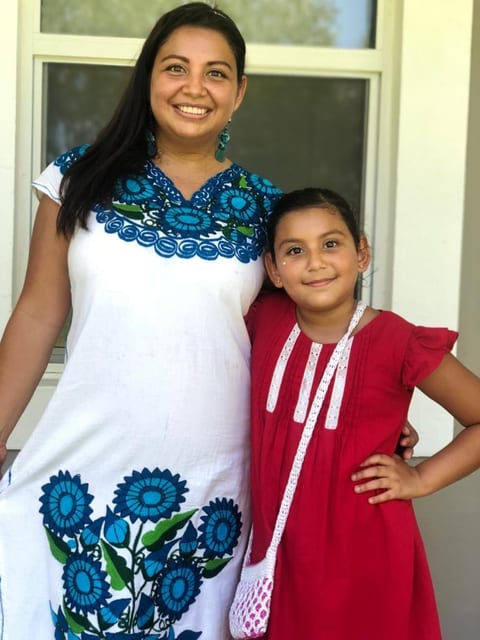
Chef Maggie
Founder and head cook at Maggie's Tamales & Catering in Richardson, Texas. Every tamal comes from her family's recipes and her own scratch kitchen. More about Maggie →
Related from Maggie's kitchen

What makes a tamal authentic? Masa, meat, chiles, and patience
There is no secret ingredient and no regional passport. Authentic means nobody skipped a step, and every step takes time. Here is what to taste for.
10 min read
How to host a tamalada without spending two days in the kitchen
A tamalada is the family tamale-making party behind every Texas Christmas. Here is how to host one in an afternoon instead of a weekend.
9 min read
Why tamales mean Christmas in Texas, and how to order yours early
Tamales have been the Christmas Eve meal in Texas homes for generations. Here is where the tradition comes from and how to get yours before the rush.
9 min readFeeding a crowd? Get a real quote today.
Tell us the date, the headcount and where to deliver. Maggie replies personally with a menu and a price.