
Tamal or tamale? Which is correct, and why we say both

Tamal or tamale? I get asked this at least once a week, usually by someone who has just ordered a dozen and wants to say it right when the food shows up at the office. It is one of my favorite questions, because the answer is a little piece of history you can carry around, and because the honest answer is that nobody in my kitchen will ever correct you either way.
The short answer: In Spanish, the singular is tamal and the plural is tamales. English speakers heard “tamales”, assumed the singular must be “tamale”, and that word has been in English dictionaries for well over a century. So tamal is correct in Spanish, tamale is correct in English, and tamales is the plural in both. Say whichever one comes out.
Where the word comes from
The word is older than Spanish in the Americas. It comes from Nahuatl, the language of the Aztecs and still spoken by more than a million people in Mexico today, where tamalli means something wrapped. That is a very good description of the food: masa wrapped around a filling, wrapped again in a husk or a leaf, steamed. The wrapping is the whole idea.
When Spanish speakers borrowed the word, they trimmed it to tamal, which fit the sound patterns of Spanish, and gave it a regular Spanish plural: tamales. Spanish words that end in a consonant take -es in the plural, the same way papel becomes papeles. One tamal, two tamales, a dozen tamales. That is how my grandmother said it, how my mother says it, and how you will hear it in any kitchen in Mexico or in most kitchens in Texas.
The food itself has been fed to crowds for thousands of years, long before either word existed in its current form. If you want that part of the story, I wrote the long history of the tamal, from Aztec feasts to the tamaladas of North Texas.
How “tamale” happened in English
English did something it does all the time with borrowed words. Speakers heard the plural, tamales, far more often than the singular, because you almost never buy or make just one. They saw the -es ending and assumed the singular was the word with the -s removed: tamale. Linguists call this a back-formation, and English is full of them.
It is the same process that gave us pea. In older English the word was pease, singular, and “pease porridge” was one bowl. People heard the -s sound and decided a single one must be a pea. Cherry came the same way from the French cherise. Nobody thinks pea or cherry is wrong today, and tamale is the same kind of word: born from a misunderstanding, then made official by a hundred years of use.
So when someone tells you “tamale is not a real word”, they are half right. It is not a Spanish word. It is very much an English one, and it appears in every major English dictionary with its own pronunciation, tuh-MAH-lee, three syllables, which is not how anyone says tamal.
So which is correct?
Both, in their own language. This is the part I want to say clearly, because I hear people apologize for saying it “wrong” and there is nothing to apologize for.
| Language | One | Several | How it sounds |
|---|---|---|---|
| Nahuatl (origin) | tamalli | tamalli | tah-MAHL-lee |
| Spanish | tamal | tamales | tah-MAHL, tah-MAH-les |
| English | tamale | tamales | tuh-MAH-lee, tuh-MAH-leez |
| Texas, in practice | either | tamales | whatever your family says |
If you speak Spanish, or you are writing for a Spanish-speaking audience, use tamal. If you are writing in English, tamale is standard and nobody will blink. If you are ordering lunch for the office, say “tamales”, because you are ordering more than one, and the question never comes up.

What we say in our kitchen, and why the website says both
At home and at the stove, it is tamal. That is the word the recipes came with, passed down from the women in my family, and it is the word I use when I open one to check the masa. When I am on the phone with an office manager in Plano, I say whatever they say, because the point of the call is lunch, not grammar.
You will notice this website uses both. That is deliberate. People in Texas search for “tamales” and “tamale catering” far more than “tamal”, and I want the person typing “tamale delivery Richardson” at eleven in the morning to find us. But in the articles, when I mean one, I write tamal, because that is my kitchen’s word and it is the one my grandmother would recognize. The business is family-owned, and the language is part of what we kept.
The one thing I will gently push back on is tamal as a plural. “A dozen tamal” is wrong in every language. It is tamales, always, when there is more than one, and there is almost always more than one.
Ordering without the awkwardness
Here is a secret: the word does not matter on an order. The numbers do. What I need from you is the headcount, the date, and the split between pork in red salsa and chicken in green. Say “tamales” and give me those three things and you have ordered perfectly.
- By the plate: the menu lists 3 tamales ($15), 6 ($30) and 12 ($60), which is $5 per tamal at any quantity. Small orders go through DoorDash during kitchen hours.
- By the dozen: for a party, an office or a church lunch, count two tamales per person for a meal and round up to the dozen. Bulk orders go through the quote form, and I price them myself, usually the same business day.
- By filling: pork in red is the crowd favorite, chicken breast in green is the milder one. If you do not know your room, go a little heavier on pork.
Nobody at Maggie’s has ever corrected a customer on the phone, and nobody is going to start. One reviewer described ours as the best tamales he had ever had, and I promise he did not get asked about his Spanish first.
A few other tamale words worth knowing
Since you are here, a small glossary, because the same people who ask about tamal versus tamale usually have three more questions behind it.
- Masa: the corn dough. Made from dried corn cooked in alkaline water, rinsed and ground. Ours is gluten-free corn masa, no wheat.
- Hoja: Spanish for leaf, and the word for the dried corn husk the tamal is wrapped in. You do not eat it. If that is news, read how to eat a tamal before the office lunch arrives.
- Tamalera: the tall steaming pot with a rack in the bottom. A regular pot with a steamer basket does the same job.
- Tamalada: the party where a family makes tamales together, usually in December, usually with an assembly line and an argument about who spreads the masa too thick.
- Chile, not chili: the dried pepper that colors our red salsa. Chili, with an i, is the Texas stew. We use the pepper, sometimes specialty chiles that came up from Mexico in my grandpa’s suitcase.
What makes a tamal a real tamal has less to do with the word and everything to do with masa, meat, chiles and patience. I wrote about that in what makes a tamal authentic, and it is a better argument to have at the table than the spelling.
Whatever you call them, order the dozen
If the tamal-or-tamale question came up because a lunch is coming, that is the easy part. Maggie’s delivers hot from our Richardson kitchen to offices, parties and holiday tables across North Dallas, labeled pork or chicken, with salsas and crema on request. A dozen is $60 and a half dozen is $30; anything bigger than a few plates gets a menu and a price from me the same business day. Request a catering quote with your date and headcount, say the word however you like, and I will take it from there.
Frequently asked questions
Is it tamal or tamale?
Both are correct, in different languages. Spanish uses tamal for one and tamales for more than one. English speakers heard the plural and built the singular tamale from it, and that word has been standard English for well over a century. Use tamal in Spanish, tamale in English, and tamales for the plural in either language. Nobody serious will correct you.
What is the singular of tamales?
In Spanish, one is a tamal; the plural adds -es the way papel becomes papeles. In English, the singular is tamale, pronounced tuh-MAH-lee. The English form is a back-formation, the same process that turned the old word pease into pea. In my kitchen we say tamal, because that is the word the family recipes came with.
Where does the word tamale come from?
From Nahuatl, the language of the Aztecs, where tamalli means something wrapped. Spanish borrowed it as tamal with the plural tamales. English then borrowed the Spanish plural and invented a new singular, tamale, by dropping the final s. So the word has traveled through three languages, and the food it names is thousands of years older than any of the spellings.
Is “tamale” considered wrong or offensive?
No. It is not a Spanish word, so a Spanish speaker might smile at it, but it is a legitimate English word listed in every major dictionary, and it is how most English speakers in Texas say it. What is actually wrong is using tamal as a plural, as in “a dozen tamal”. More than one is always tamales. Order in whichever word feels natural and give me the headcount instead.
How do you pronounce tamal and tamale?
Tamal has two syllables, tah-MAHL, with the stress on the second and a clean l at the end. Tamale has three, tuh-MAH-lee. The plural tamales is tah-MAH-les in Spanish and tuh-MAH-leez in English. In North Dallas you will hear all four in the same lunch line, and the tamales taste exactly the same regardless of which one you used to ask for them.
Does Maggie’s call them tamales or tamals on the menu?
The menu says tamales, because every plate has more than one: 3 for $15; 6 for $30; a dozen for $60. In the articles I write tamal when I mean a single one, because that is my family’s word. When you order, say tamales and tell me how many people, the date, and how you want the pork-and-chicken split. That is all the vocabulary an order needs.
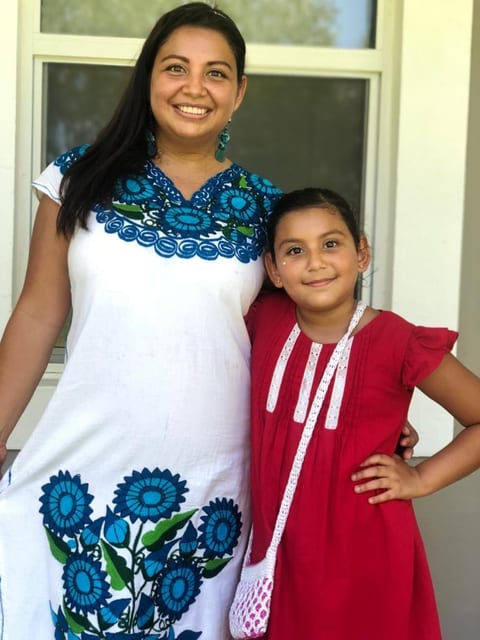
Chef Maggie
Founder and head cook at Maggie's Tamales & Catering in Richardson, Texas. Every tamal comes from her family's recipes and her own scratch kitchen. More about Maggie →
Related from Maggie's kitchen

The long history of tamales, from Aztec feasts to Texas kitchens
The tamal is older than the Aztecs and still fed by the same corn. A chef’s tour of where it came from and how it reached Texas.
9 min read
How to eat tamales (and why you never eat the husk)
Unwrap it, do not eat the wrapper, and then it is up to you. Fork, hands, salsa, crema, and how to keep 50 first-timers from chewing on corn husks.
9 min read
What makes a tamal authentic? Masa, meat, chiles, and patience
There is no secret ingredient and no regional passport. Authentic means nobody skipped a step, and every step takes time. Here is what to taste for.
10 min readFeeding a crowd? Get a real quote today.
Tell us the date, the headcount and where to deliver. Maggie replies personally with a menu and a price.