
What are tamales made of? Masa, filling, husk and what changes the taste

People ask me what tamales are made of more than they ask about anything else, usually while they are holding one and trying to work out where the corn stops and the meat starts. It is a fair question. A tamal looks simple, and it is, but each of its three parts does a job, and each one changes the taste.
The short answer: A tamal is made of three things: masa (a dough of ground nixtamalized corn, fat, broth and salt), a filling (at Maggie’s, pork in red chile salsa or chicken breast in green tomatillo salsa), and a wrapper (a dried corn husk) that holds it together while it steams. The masa is gluten-free. What changes the taste is the quality of the corn, the fat, the chiles and the time you give it.
What tamales are made of: the three parts
Every tamal on earth, from Oaxaca to my kitchen in Richardson, is built the same way. There is a dough, there is something inside the dough, and there is something wrapped around the outside so the whole thing can steam without falling apart. That is it. The regional differences, the family arguments, and the reason one tamal tastes like cardboard while another makes you close your eyes all live inside those three parts.
| Part | What it is made of | What it changes |
|---|---|---|
| Masa | Nixtamalized corn, fat, broth, salt, a pinch of baking powder | Texture, richness, how tender the bite is |
| Filling | Slow-cooked pork or chicken in a chile salsa | Flavor, heat, how juicy it eats |
| Wrapper | Dried corn husk (banana leaf in some regions) | Aroma, moisture, the shape |
I will take each one in turn, because the order matters. Masa first, always. A tamal with a great filling and dry masa is a bad tamal. A tamal with perfect masa and a plain filling is still a good tamal. Ask any grandmother.
Masa: corn, fat, broth and air
Masa is not cornmeal and it is not polenta. It starts with dried field corn that has been cooked and soaked in an alkaline solution, usually slaked lime, then rinsed and ground. That process is called nixtamalization. It is thousands of years old, and it is the reason masa smells the way it does: sweet, toasty, a little like the air outside a tortilla factory. It also unlocks the niacin in the corn so your body can use it, which is why the people who invented it could live on corn without getting sick.
Into that ground corn goes fat. Traditionally lard, because lard whips light and carries flavor, and because it was what the family had. Some kitchens use vegetable shortening or oil. Then warm broth, usually from the same pot the meat cooked in, so the masa tastes like the filling before the filling even shows up. Salt. A pinch of baking powder if you want lift.
Then you beat it. This is the step people skip, and it is the step that matters most. Masa has to be whipped until it is fluffy enough that a small spoonful floats in a glass of cold water. That trapped air is what makes a steamed tamal tender instead of dense. In our kitchen the masa is made from scratch each morning, and the last minute of beating is always done by hand, because the hand tells you when it is ready.
Because it is corn and not wheat, masa is gluten-free by nature. I go into the details in what makes masa gluten-free, including the one case where it is not.

The fillings: pork in red, chicken in green
You can put almost anything inside masa, and somebody somewhere has. Beans and cheese, rajas with corn, shrimp, mole, and a few things from the mountain villages that I will not list before lunch. But the two fillings that built this business, and the two on our menu, are the two that Texas keeps coming back to.
Pork in red salsa
Pork, cooked slowly until it pulls apart with a fork, then folded into a red salsa made from dried chiles. Traditionally that means shoulder, because it has the fat to stay juicy through a long steam. Which chiles go into the salsa is the family secret, but I will say that guajillo and ancho are the backbone of most red tamal salsas, and that we sometimes use specialty chiles that came up from Mexico in grandpa’s suitcase. The result is deep, a little smoky, with what our reviewers keep calling a little kick. It is the tamal most people picture when they picture a tamal.
Chicken in green salsa
Chicken breast, poached and shredded, in a salsa verde made from tomatillos, fresh green chiles, onion, garlic and cilantro. Brighter and tangier than the red, leaner because it is breast meat, and the one I steer people toward when they tell me they do not like spicy food. It is not bland; tomatillos have their own sour snap. It is just a different kind of loud.
If you are trying to decide between them for a group, I wrote a whole piece on pork tamales vs. chicken tamales. The short version: order both, lean pork.
The husk, and why it is not just packaging
A corn husk is the dried outer leaf of an ear of corn. Before we use it, it soaks in warm water until it is soft and flexible, then it gets a spread of masa, a spoon of filling, and a fold. Nobody eats the husk, which I have to say out loud more often than you would think; there is a whole article on how to eat a tamal for the people who need it.
But the husk is not neutral. As the tamal steams, the husk gives up a faint grassy sweetness to the outside of the masa, and it controls moisture, letting steam in slowly so the masa cooks through without turning to mush. In southern Mexico and much of Central America, banana leaves do the same job and leave a different flavor, greener and almost floral, with a smoother, wetter masa. I compare the two in corn husk vs. banana leaf tamales. In Texas, husk wins, and husk is what we use.
What actually changes the taste
Two kitchens can use the same three ingredients and make tamales that taste nothing alike. Here is where the difference comes from, in the order I think about it.
- The fat in the masa. Lard makes a richer, more tender, more savory masa. Shortening makes a paler, blander one that stays firm. Oil sits somewhere in between. You can taste this in the first bite, before you reach the filling.
- How long you beat it. Under-whipped masa is heavy and gummy. It is the single most common fault in a store-bought tamal.
- The chiles. Fresh, properly toasted dried chiles taste of fruit and smoke. Old chiles taste of dust. Chile powder from a jar tastes of the jar.
- The meat. Good cuts cooked slowly in their own liquid, with that liquid going back into the masa. Cheap trimmings cooked fast give you strings; the slow way gives you the “packed with meat” tamal that shows up in our Google reviews.
- The ratio. A moderate layer of masa around a generous filling is what makes a tamal feel big. Ours are large enough that two make a lunch and three make a dinner.
- Steam time and rest. Tamales need a full steam and then ten minutes of rest so the masa sets and pulls cleanly from the husk. Rushed tamales stick.
None of those are secrets, exactly. They are just work, and most of them are the kind of work that gets cut first when a kitchen grows. I go deeper into that in what makes a tamal authentic.
What is not in our tamales
People ask this almost as often, so, plainly: no wheat flour, no fillers in the masa, no pre-made chile bases, no meat that arrives already cooked, no shortcuts. The masa is corn, so every tamal on our menu is made with gluten-free masa. We are not a certified gluten-free facility, since the flour tortillas for our burritos are handled in the same kitchen, and I would rather tell you that up front than have you find out. Dairy is limited to the crema that goes on top, which we send on the side for catering. If someone at your table has a specific allergy, read tamales and allergens and then ask me directly; I answer every question myself.
The recipes came down from the women in my family, and I still cook a little in the spirit of Like Water for Chocolate: what you feel goes into the pot. The rest of that story is on our about page.
Want to taste the difference?
The easiest way to understand what tamales are made of is to eat one that was made properly. Maggie’s Tamales delivers across Richardson, Plano and the north Dallas suburbs: a plate of three for a quiet lunch through DoorDash, or dozens for an office, a birthday or a holiday table through our catering service. Tell me the date and how many people you are feeding, and I will send a menu and a price the same day. Request a quote and I will take it from there.
Frequently asked questions
What are tamales made of, in the simplest terms?
Corn masa, a filling, and a corn husk. The masa is a dough of nixtamalized corn beaten with fat, broth and salt. The filling is usually slow-cooked meat in a chile salsa; ours are pork in red salsa and chicken breast in green tomatillo salsa. The husk wraps the whole thing so it can steam. You peel the husk off and eat everything inside it.
Is the masa in tamales the same as cornmeal?
No. Cornmeal is dried corn that has simply been ground. Masa comes from corn that was first cooked and soaked in an alkaline solution, a process called nixtamalization, which changes the flavor, the texture and the nutrition. That is why masa smells sweet and toasty and holds together when you spread it, while cornmeal stays gritty and crumbles. You cannot make a proper tamal with cornmeal.
Do tamales contain lard?
Traditionally, yes. Lard is the classic fat in tamal masa because it whips light and gives the masa its tender, savory bite. Some kitchens use vegetable shortening or oil instead, and the result is a little firmer and blander. If the fat matters to you for dietary or religious reasons, ask me when you request a quote and I will tell you exactly what goes into ours.
Are tamales gluten-free?
The masa is made from corn, so tamales are naturally gluten-free, and every tamal on our menu uses gluten-free corn masa. We are not a certified gluten-free facility, because the flour tortillas for our burritos are handled in the same kitchen. For most guests avoiding gluten that is fine; for someone with celiac disease, please tell me so we can talk it through before you order.
What meat is in a pork tamal?
In most red pork tamales, the meat is pork shoulder, cooked slowly in seasoned water until it shreds, then folded into a red salsa built on dried chiles like guajillo and ancho. The cooking liquid usually goes back into the masa. We use the finest meats and chiles we can find in Texas, and the pork is what makes reviewers describe our tamales as huge and packed with meat.
Why is the husk still on a tamal when it arrives?
Because the husk is part of how a tamal stays good. It keeps the masa moist during steaming, protects it during delivery, and holds heat far longer than a bare tamal would. You unwrap it at the table: open the husk, slide the tamal onto your plate, and throw the husk away. For catering we send tamales in their husks, labeled by filling, so guests can tell pork from chicken at a glance.
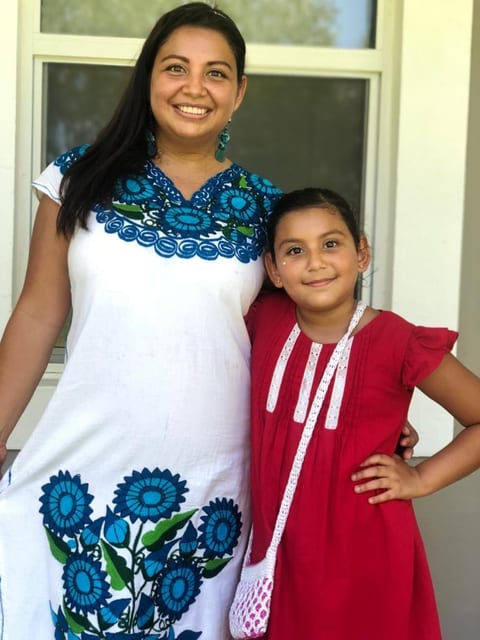
Chef Maggie
Founder and head cook at Maggie's Tamales & Catering in Richardson, Texas. Every tamal comes from her family's recipes and her own scratch kitchen. More about Maggie →
Related from Maggie's kitchen

What makes a tamal authentic? Masa, meat, chiles, and patience
There is no secret ingredient and no regional passport. Authentic means nobody skipped a step, and every step takes time. Here is what to taste for.
10 min read
Corn husk vs. banana leaf tamales: what the wrapper changes
One is dry and papery, the other is green and glossy, and the tamal inside comes out different. What each wrapper does and why my kitchen uses corn.
10 min read
Pork vs. chicken tamales: which to order, and how to split a crowd
Red pork or green chicken? Here is how the two tamales differ, who reaches for which, and the split that leaves nobody stuck with the last dozen.
8 min readFeeding a crowd? Get a real quote today.
Tell us the date, the headcount and where to deliver. Maggie replies personally with a menu and a price.